Magnaisuren Sandag
Auditor General of Mongolia

Asian Journal of Government Audit
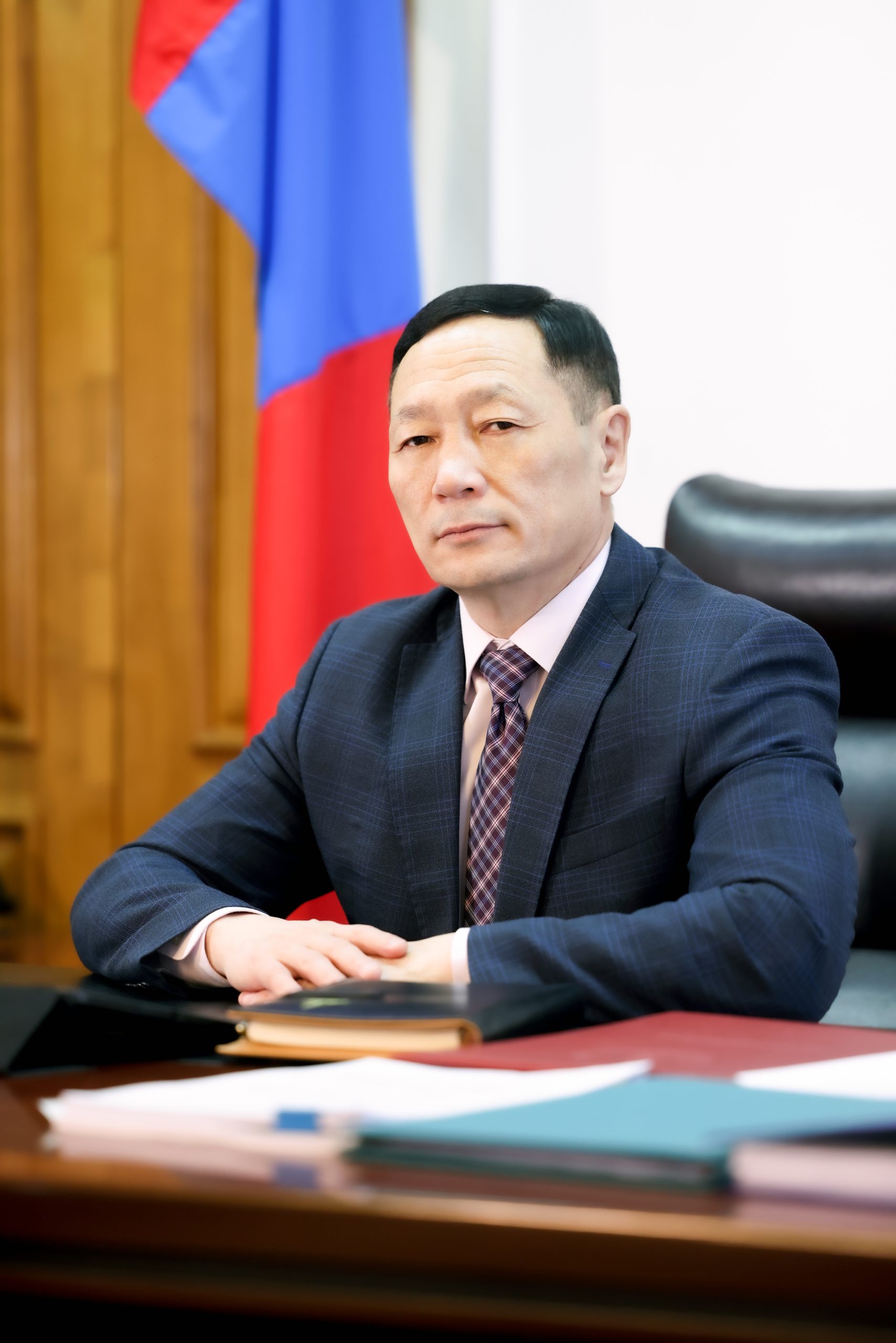
Magnaisuren Sandag
Auditor General of Mongolia
This article outlines how the Mongolian National Audit Office (MNAO) is strengthening public sector accountability through integrated and cross-cutting audit practices supported by stakeholder engagement and quality management reforms. It highlights institutional efforts to align audit planning with issues of public interest by incorporating stakeholder and citizen input, enabling audits to address cross-sectoral risks and systematic challenges.
The Mongolian National Audit Office is the Supreme Audit Institution of Mongolia, mandated to ensure accountability, transparency, and effective oversight in the management of public finances and state assets. The origins of state audit in Mongolia date back to 1922, reflecting more than a century of institutional development shaped by the country's political, economic, and social transformation.
Following Mongolia's transition to a democratic system and market economy in the early 1990s, the state audit system underwent substantial reform. A key milestone was the adoption of the Law on State Audit in 2003, which institutionalized the modern state audit framework. The law established MNAO's mandate, independence, and organizational structure in alignment with internationally recognized auditing principles and standards.
Operating under the Constitution of Mongolia, MNAO conducts financial, compliance, and performance audits of public funds, state assets, and government programs at both central and subnational levels. Through its independent oversight role, MNAO supports the Parliament, public institutions, and citizens by promoting sound public financial management, good governance, and public trust.
The institution is headed by the General Auditor of Mongolia, Magnaisuren Sandag. As an active member of INTOSAI and ASOSAI, MNAO aligns its professional practices with international standards and actively contributes to regional and global cooperation, capacity development, and knowledge-sharing initiatives.
For the MNAO 2025 has been a year marked by strengthening strategic planning aligned with INTOSAI development approach, improving governance structures, advancing digital transformation, enhancing human resource capacity, reinforcing audit oversight and implementing concrete actions aimed at improving audit decision-making and effectiveness.
Rising Public Expectations and the Need for Stakeholder-Driven Reform
In recent years, public expectations regarding the transparency and effectiveness of government operations have continued to rise. Citizens increasingly demand clear and accurate answers to fundamental questions: whether public policies are implemented in the public interest, whether government programs deliver tangible benefits, and whether state and local budgets and public assets are used efficiently to improve people's livelihoods.
Within the authority granted by the Constitution of Mongolia and the Law on State Audit, MNAO serves as the principal institution responsible for independent oversight and accountability over public policies and operations, state finances and budgets, and the planning, allocation, utilization, and expenditure of public assets. However, international experience and internal assessments have demonstrated that when a Supreme Audit Institution conducts its work with limited engagement with stakeholders, audit quality and effectiveness may be reduced, and societal impact weakened.
Recognizing this challenge, MNAO has increasingly emphasized the importance of stakeholder engagement as a strategic tool for enhancing audit relevance, impact, and public value.
The key stakeholders of MNAO include:
Effective engagement with these stakeholders contributes to several critical outcomes:
Enhancing Audit Impact and Effectiveness
By establishing appropriate, effective, and mutually beneficial relationships, audit recommendations are more likely to be implemented, leading to tangible improvements in public administration and service delivery.
Strengthening Institutional Independence
Broad-based understanding and support for the SAI's mandate, activities, and audit findings help reinforce institutional independence and credibility.
Enhancing Transparency and Accountability
Clear, accessible communication of audit findings strengthens public oversight of budgets, public finances, and state assets, supporting improvements in government performance and public trust.
Improving Strategic Coherence
Engaging stakeholders in strategic planning ensures that audit activities remain aligned with public needs, expectations, and emerging risks.
Adoption of the Stakeholder Engagement Strategy (2025–2030)
In 2025, the Mongolian National Audit Office developed and adopted a comprehensive Stakeholder Engagement Strategy aligned with its 2025–2030 Strategic Plan. The strategy reflects a deliberate shift toward a more open, participatory, and outcome-oriented audit model.
At the core of the strategy is the designation of Top Priority 1: Increasing public trust in state audit and strengthening the significance of public sector auditing. This priority signals a strategic transition from focusing primarily on internal performance indicators toward conducting audits that address issues of high societal relevance and deliver tangible value to stakeholders.
In line with this priority, Strategic Objective 1 was defined as conducting state audits on issues of public interest that attract citizens' attention and demand accurate answers, while providing citizens and stakeholders with reliable and factual information. This objective promotes greater openness in audit topic selection, transparent disclosure of audit results, and increased public oversight of audit follow-up activities.
The strategy recognizes that while numerous public policies and programs are implemented each year, mechanisms that allow citizens to clearly see, understand, and monitor their impact remain limited. Accordingly, state audit must go beyond identifying errors and irregularities and issuing conclusions. It must also take into account citizens' feedback, prevailing conditions, and potential risks in order to enhance audit impact and contribute to meaningful policy improvement.
Policy Framework for Ensuring Stakeholder Engagement
Based on its mandate, strategic objectives, internal and external assessment results, INTOSAI's Professional Pronouncements, and good practices of other SAIs, MNAO developed a Policy Framework for Ensuring Stakeholder Engagement.
The policy and its implementation action plan were developed through a fully participatory process at three levels:
Internal Engagement
The draft policy was presented to MNAO headquarters and to state audit organizations at provincial and capital city levels. Feedback was collected to ensure alignment with organizational mandates, structures, and regional characteristics, and responses were provided on how comments were addressed.
Stakeholder Engagement
Prior to approval, the draft policy was openly discussed with key stakeholders, including Parliament, government entities, audited organizations, citizens, civil society organizations, media, academic institutions, international partners, and donor organizations. This process enabled MNAO to capture genuine expectations and improvement proposals and reflect them in policy design, terminology, and implementation measures.
Feedback from International Partners
The initiative was presented to senior representatives of the INTOSAI Development Initiative (IDI), ensuring alignment with international principles on enhancing audit impact through stakeholder collaboration.
The resulting policy is underpinned by the principle of "leave no one behind", aiming to make MNAO more accessible, transparent, and responsive to the needs of society.
KEY MILESTONE: PUBLIC PARTICIPATION IN THE SELECTION OF AUDIT TOPICS
A key component of MNAO's stakeholder-driven reform is the introduction of public participation mechanisms in audit topic selection.
Use of the "11-11" Citizen Engagement Platform
Complaints and suggestions submitted by citizens through the Government's "11-11 Public Service and Citizen Engagement Center" were systematically analyzed and selectively included as potential audit topics.
Analysis of submissions from 2022 to the second quarter of 2025 showed that many complaints related to public services, public officials, and sectors within the mandate of the Capital City Governor's Office, including housing maintenance, water supply, heating, and electricity distribution. Over a four-year period, complaints related to these services increased from 16.2% to 20.5%.
Based on this evidence, the 2026 draft audit plan includes an audit on the readiness of Ulaanbaatar City's heating supply system and the effectiveness of heat distribution to consumers.
Digital Citizen Proposals via E-Mongolia
Starting in the first quarter of 2025, MNAO, in cooperation with the E-Mongolia Academy, which provides E-Mongolia the national e-government service system, introduced an online service enabling citizens to submit proposals for performance audit topics.
Between 21 January and 30 June 2025, a total of 77 proposals were received. After prioritization and assessment against audit standards and legal criteria, submissions related to dividend distribution of "Erdenes Tavantolgoi" JSC accounted for 22.5% of all proposals and were selected as audit subjects.
Notably, 95% of citizen submissions related to public services, public institutions, and public officials, highlighting strong public interest in service delivery and governance issues.
By digitalizing the process, MNAO established a good practice that enables all citizens—regardless of location or time—to draw audit attention to high-risk issues such as inefficiencies, misuse of budget funds, and fraud-related activities.

KEY MILESTONE: IMPLEMENTING ISSAI 140
The revision and entry into force of ISSAI 140 on Quality Management for Supreme Audit Institutions marked a significant shift from traditional quality control approaches toward a comprehensive, risk-based quality management system. In response, the Mongolian National Audit Office has undertaken a series of practical and institutional measures to ensure effective implementation of the standard.
To prepare for implementation, MNAO developed and approved an implementation plan covering the period 2024–2025. The plan sets out clear stages, responsibilities, and timelines for transitioning from a quality control system to a quality management system applicable across all audit types and organizational levels.
As an initial step, ISSAI 140 was translated into Mongolian and reviewed through internal professional discussion. The translated standard was validated and formally approved to ensure a common and accurate understanding of quality management requirements across the institution. This provided a unified methodological foundation for subsequent implementation activities.
In parallel, MNAO conducted a needs and gap assessment to evaluate existing quality-related policies, procedures, and practices against the requirements of ISSAI 140. This assessment identified strengths, gaps, and areas requiring further development, including governance arrangements, risk assessment processes, documentation practices, and responsibilities for quality management.
Based on the assessment results, MNAO initiated work to define quality objectives and identify quality risks at both the organizational and engagement levels. This includes clarifying roles and responsibilities related to quality management, strengthening leadership oversight, and integrating quality considerations into audit planning, execution, reporting, and follow-up processes.
To support consistent implementation, practical guidance materials on audit quality management are being adapted and disseminated across the organization. These materials aim to help auditors and managers understand how quality objectives, risks, and responses are applied in daily audit work, rather than treating quality management as a separate or compliance-driven exercise.
Capacity-building activities have also been initiated to raise awareness and understanding of the quality management system among staff. These efforts emphasize that quality management is not the responsibility of a single unit, but a shared responsibility across the institution, with every auditor contributing to audit quality through professional judgment, ethical conduct, and adherence to standards.
Looking ahead: Sustaining Reform and Audit Quality
MNAO recognizes that implementing ISSAI standards and establishing a quality management system is not a one-time reform, but a long-term and continuous process. Building on the foundations laid during 2024–2025, the institution is preparing an Action Plan for Implementing Quality Objectives for 2026–2030. This plan will guide further development, implementation, and monitoring of the quality management system.
The timelines and activities set out in the action plan will be integrated into annual and quarterly work plans, ensuring systematic implementation and regular review. Adjustments will be made as necessary in response to emerging risks, institutional changes, and lessons learned from practice.
By strengthening stakeholder engagement and establishing a robust quality management system, the Mongolian National Audit Office aims to enhance audit outcome, increase public trust, and reinforce the relevance and value of state audit in society. These reforms represent an important step toward ensuring that audit results translate into tangible improvements in governance, public service delivery, and the lives of citizens.